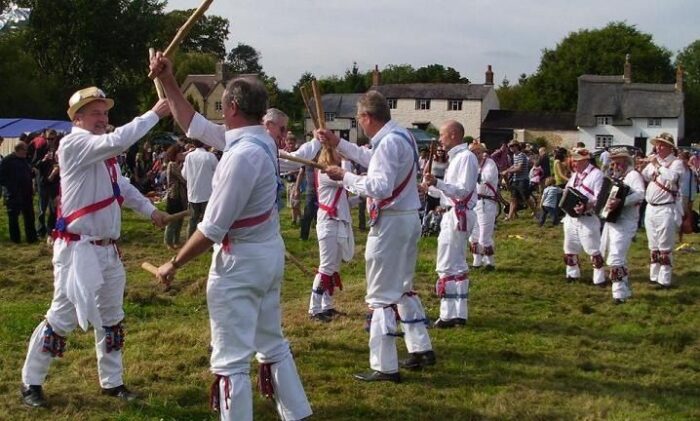
Morris dancers in white costumes perform with sticks at a village gathering

Bells, Baldricks, and Bampton: How to Watch Oxfordshire Morris Dancing Like an Insider

Unlocking the Street Spectacle of Cotswold Morris

The first encounter can feel almost cinematic. Brass bells strike the air, a concertina gathers speed, and a line of white-clad dancers suddenly takes possession of a village square, green, or pub forecourt. Handkerchiefs flare like small flags, sticks crack together above shoulder height, and the dancers leap with an energy that makes the whole setting seem to tilt towards the performance. In Oxfordshire, this is not a museum display. It is a living event, often encountered at close quarters, with spectators standing only a few steps from the set.

For visitors exploring Headington Quarry Morris or seeking the celebrated dances of Bampton, the key is to move beyond the familiar stereotypes of Morris as quaint, baffling, or faintly comic. Cotswold Morris is street theatre, rhythmic exercise, local history, costume craft, and community ritual at once. Oxfordshire is one of its great heartlands, with old village traditions, revival sides, university dancers, and mixed groups keeping the repertoire in motion. Once the visual clues and musical patterns become legible, the spectacle becomes far more vivid.

Cracking the Kit Code Across Oxfordshire Parishes

The white shirt and trousers create the visual ground on which each side writes its identity. Across the costume, a baldrick, or crossed sash, may carry ribbons, badges, rosettes, and other details associated with a particular village or organisation. These are not merely decorative flourishes. They can commemorate dancers, mark anniversaries, refer to local occupations, or preserve the memory of an older kit. A close look often reveals years of communal history in miniature, particularly in the handmade decorations and carefully maintained accessories.

The bells below the knee are equally important. They are not fitted simply to provide a cheerful jingle. The dancer’s stepping, stamping, and leaping give them kinetic force, creating a second percussion line beneath the music. The effect is strongest when six dancers land together, turning movement into sound. Black shoes are common, although historical research shows that footwear was once an economic issue, since poorly paid labourers could struggle to replace worn dancing shoes. Hats are more variable and often carry their own stories, from inherited decorations to local styles such as cricket caps.

Costume differences are especially useful when several sides appear at the same event. The table below is a guide rather than a rigid rule. Morris kit changes over time, and individual dancers may wear personal variations, but these broad characteristics help newcomers read the scene.

Side or tradition Visual clues What to notice
Bampton Morris White clothing, bells, decorated baldricks, distinctive village regalia A deep local repertoire, strong Whit Monday identity, and supporting characters linked to Bampton custom
Headington Quarry Morris White kit with ribbons, badges, bells, sticks, and local associations Connections to Quarry history, William Kimber, and a repertoire preserved through generations
Oxford University Morris Contemporary mixed-gender Cotswold kit with side-specific ribbons and accessories A university, alumni, and city-facing tradition that performs locally and on tour
Other Cotswold sides White shirts and trousers or dark breeches, black shoes, bells, baldricks or waistcoats Village-specific steps, colours, music, and variations in hats, flowers, ribbons, and props

Deciphering the Dance Mechanics of Sticks and Hankies

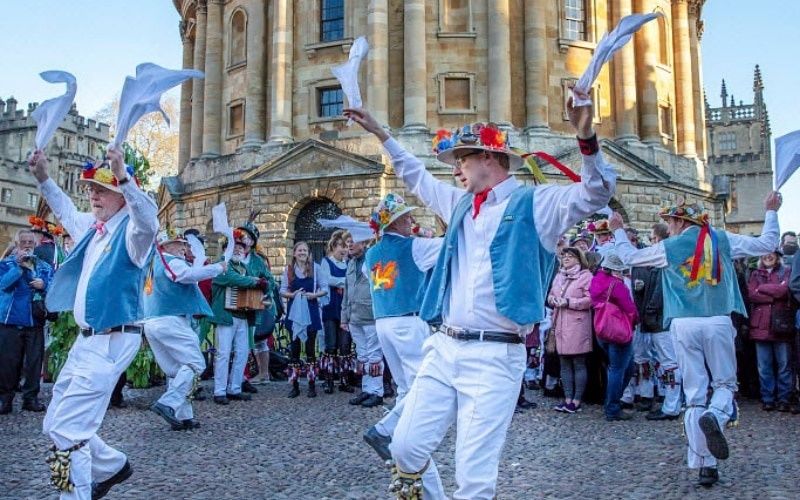
Large white handkerchiefs make the movement readable from a distance, but their purpose goes well beyond visibility. A sharp wrist snap sends the cloth into a sudden arc, allowing spectators to see the exact moment a gesture begins and ends. During a leap, the hankies can appear to suspend the dancer in the air. They frame the arms, emphasise changes of direction, and make a compact sequence of steps feel expansive. Watch the wrists rather than only the feet, and the discipline behind the apparent exuberance becomes clear.

Morris dancers wave white handkerchiefs outside a historic Oxford building
The sweeping gestures of hanky dances turn precise footwork into a visual language that connects performers with the watching crowd.

Stick dances add a percussion instrument to the choreography. The sticks are generally seasoned hazel or ash, prepared to withstand repeated impact, but the striking still demands accuracy and trust. Dancers must judge distance, raise the stick cleanly, meet the partner’s blow at the correct point, and recover without breaking the rhythm. The crack is exhilarating because it carries a small, controlled risk. It is not random roughness; it is a carefully rehearsed conversation in wood, timing, and space.

A conventional Cotswold set often begins with six dancers arranged in a recognisable formation, although dances may be adapted for fewer performers or presented as solo and paired jigs. A musician, commonly playing a fiddle, melodeon, or concertina, provides the pulse and responds to the dancers’ phrasing. The Fool may enter as an energetic disruptor, guide, comic commentator, or protector of the performance space. Other sides may include a Squire, who leads and manages the set, a Bagman handling practical arrangements, or characters carrying a cake or a bladder-and-tail staff. The Cotswold Morris tradition contains many such local variations, so the same basic grammar can produce remarkably different theatrical personalities.

  • Hankies emphasise wrist action, leaps, turns, and moments of suspension.
  • Sticks create rhythmic clashes that demand precision and partner awareness.
  • Bells reinforce the footwork and make the dancers audible as well as visible.
  • The musician controls momentum, phrasing, and the dramatic shape of the dance.
  • The Fool and other characters connect the formal set with spectators, humour, and local ceremony.

The Whit Monday Pilgrimage to Bampton

Bampton’s Whit Monday gathering is one of the most immersive Morris experiences in England. Written evidence places the tradition in the eighteenth and nineteenth centuries, while local memory reaches further back, sometimes to the sixteenth century. The important point for a visitor is continuity. Bampton Morris has not been reconstructed solely for an audience; its dances, tunes, relationships, and rivalries have been carried through local families and successive generations. The tradition has also changed, with several sides now sharing the day and visiting groups adding to the atmosphere.

The geography is part of the performance. Dancing can begin early and continue until evening, moving through streets, church grounds, pub car parks, private gardens opened to visitors, and other village spaces. A garden set can feel intimate and ceremonial, while a pub performance may be louder, busier, and full of passing conversations. Following the sides means walking, waiting, and occasionally making a quick decision about which route to take next. There is no single grandstand from which to understand Bampton. The day is a moving village encounter.

Whit Monday is now associated with the Spring Bank Holiday, although the name reflects the older calendar connection with Pentecost. Visitors should treat the occasion as a community custom first and a heritage attraction second. The most rewarding spectators are attentive without becoming intrusive, generous with collections, and willing to let the village rhythm set the pace.

  1. Arrive early. The first dances offer a quieter introduction and help establish where the different sides are gathering.
  2. Wear practical shoes. Expect uneven paths, standing, walking between locations, and occasional wet ground.
  3. Check the programme locally. Timings and locations can vary, so follow notices, side announcements, and steward guidance.
  4. Use pubs considerately. Order refreshments, make room for residents, and remember that a pub forecourt may also be a working village space.
  5. Respect private gardens and church grounds. Enter only where access is clearly offered, keep pathways clear, and ask before photographing close-up.
  6. Leave room around the set. Dancers need space for sticks, leaps, and entrances, while the Fool may move unpredictably through the crowd.

Where to Catch the Best Pub Performances and May Day Dawn Rites

The Mason’s Arms at Headington Quarry is a particularly rewarding place to watch a side in its own surroundings. On the May Bank Holiday, Headington Quarry Morris Dancers perform around the green opposite the pub, a location closely tied to the side’s identity. The setting recalls the working community of independent quarrymen and the women who supported local livelihoods through laundries and seasonal trading. Costume details and sticks carry echoes of that history, while the dance itself brings together bells, hankies, clashes, and the bright pulse of an Anglo concertina. The side’s revival in 1899, and William Kimber’s influence on Cecil Sharp, connect this local green to the wider English folk revival.

Oxford city centre offers a different scale of spectacle on May Morning. University sides, Oxford City Morris, and combined Town and Gown performances gather around the dawn celebrations, with music and dancing woven into the early atmosphere of the city. Oxford University Morris also maintains a lively summer season, including visits to city pubs on Wednesday evenings. For reliable background on classes, archives, performances, and wider folk opportunities, the English Folk Dance and Song Society is a useful national resource.

  • Check the side’s official website or social media before travelling, especially for weather changes and revised timings.
  • Arrive ahead of the advertised dance if a good view matters, since pub greens and narrow streets fill quickly.
  • Bring cash for collection boxes, as donations support musicians, costumes, travel, and the continuation of local traditions.
  • Use public transport where possible and plan the final walk, particularly for dawn events in central Oxford.
  • Ask before joining a dance or entering a set, but feel free to speak with dancers between performances.
  • Dress for an outdoor event, with layers, waterproof footwear, sun protection, and a bag that leaves both hands free.

Step Into the Ring and Experience Living English Folklore

Watching Morris with an insider’s eye changes the experience completely. The bells become a map of the footwork, the baldrick becomes a record of place and allegiance, and the Fool’s interruption becomes part of a carefully balanced theatrical tradition. What first appears odd or archaic reveals itself as a demanding communal art, shaped by memory but sustained through present-day bodies, musicians, organisers, families, students, and local audiences.

Stand close enough to feel the rhythm, while keeping clear of the dancers’ working space. Listen for the relationship between concertina, feet, bells, and stick-clash. Put a few coins in the collection box, thank the musicians, and ask respectful questions between sets. Then look for upcoming dance-outs across Oxfordshire during the spring and summer season. Bampton, Headington Quarry, Oxford’s May Morning, and smaller village appearances each offer a different doorway into the tradition. The best way to understand Cotswold Morris is not to decode it from a distance, but to meet it where it lives, in the open air and among the people who continue to dance.

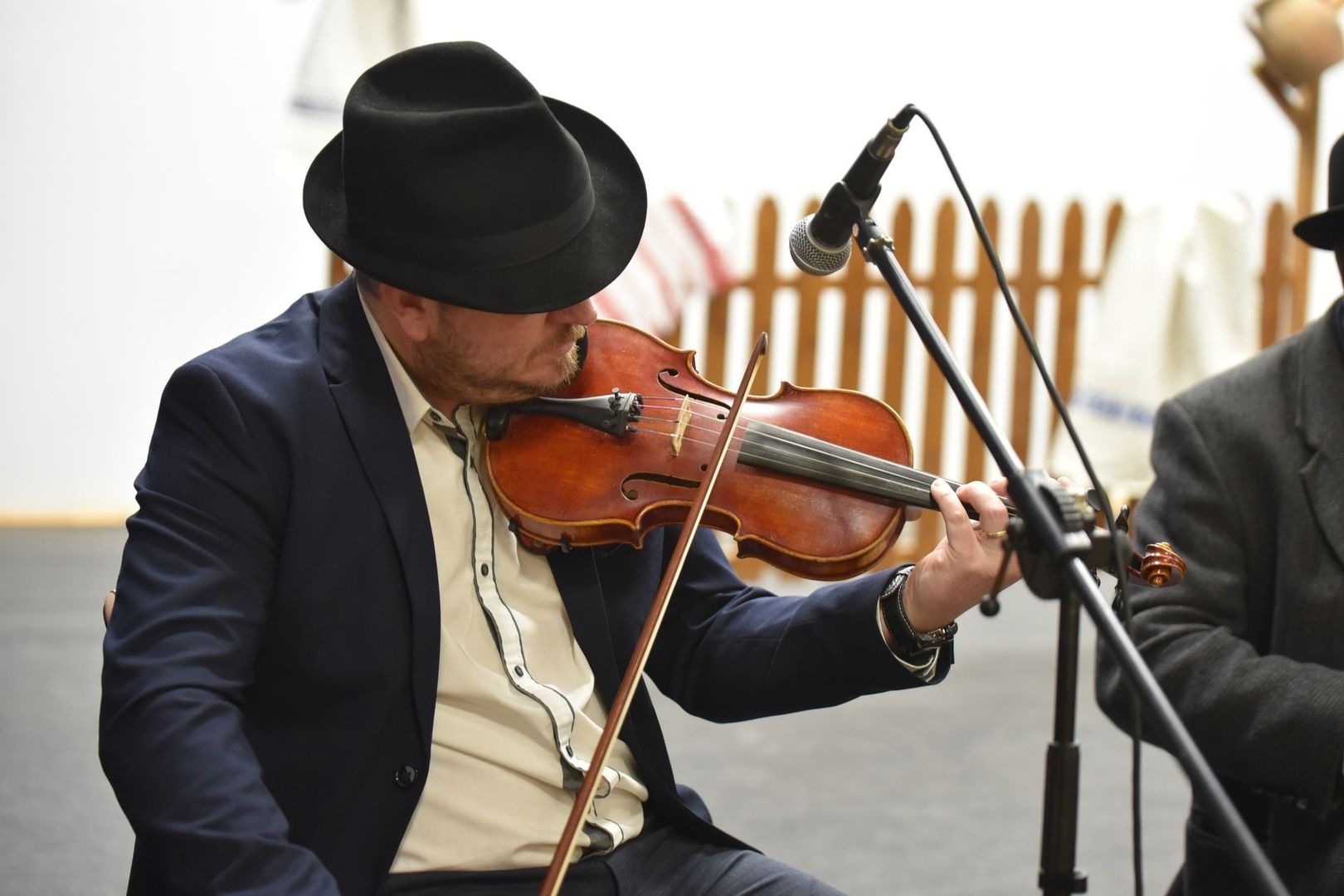
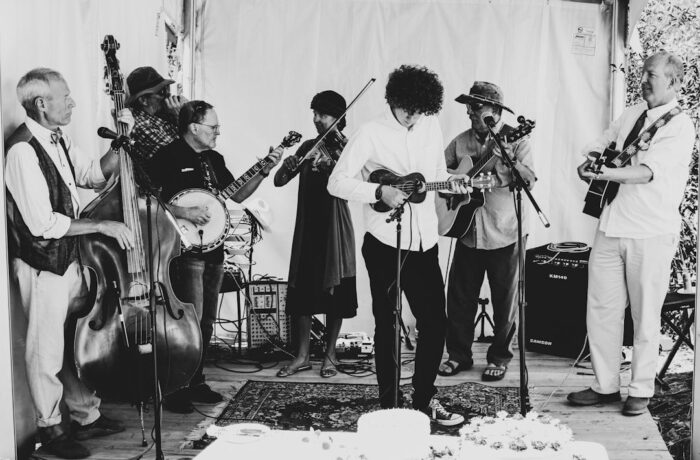
Musicians performing a ceilidh-style folk set on a small stage

Stepping into Your First Oxford Ceilidh: A Beginner’s Guide to Floor Etiquette, the Caller, and Letting Go

Crossing the Threshold into Oxford Folk Energy

There is a particular warmth to entering an Oxford ceilidh. Perhaps it is the sudden lift of a fiddle tune in a college hall, the bright pulse of an accordion, or the sight of dancers already forming circles beneath old beams and chandeliers. Across student rooms, community venues, pubs, and festival spaces, traditional social dancing creates an atmosphere that is lively without being exclusive. A local folk gathering may bring together experienced dancers, visiting musicians, curious residents, and students who have never attempted a formation dance before.

It is entirely normal to feel a flicker of performance anxiety. Scottish reels, Irish céilí dances, and English barn dances can sound wonderfully intricate when watched from the edge of the room. The unfamiliar names, quick changes, and apparent confidence of returning dancers may suggest that everyone else has received a secret handbook. They have not. The essential truth is that a ceilidh is not a test of technical skill. It is a communal celebration in which callers, musicians, and fellow dancers provide a constant safety net. Connection, rhythm, good humour, and willingness to join in matter far more than polished footwork.

Understanding the Magic of the Living Ceilidh Tradition

The word ceilidh comes from the Gaelic tradition of a social gathering. Historically, such gatherings could include music, dancing, singing, storytelling, poetry, conversation, and food. Dance was part of a wider culture of participation rather than a separate performance placed before an audience. That spirit remains important today. A modern Oxford ceilidh may feature a highly accomplished band, but its real energy comes from the room: people listening, responding, moving together, and making space for newcomers.

Several related traditions may appear under the same broad social-dance umbrella. A Scottish cèilidh often features reels, jigs, marches, energetic group formations, and instruments such as fiddle, accordion, melodeon, guitar, and drums. An Irish céilí has its own dance repertoire and musical character, with an emphasis on set dances, circles, lines, and coordinated group movement. English barn dances draw on English country-dance traditions and may have a more measured, sharply accented feel. In practice, Oxford events often blend these influences, creating a welcoming modern format rooted in several strands of folk culture.

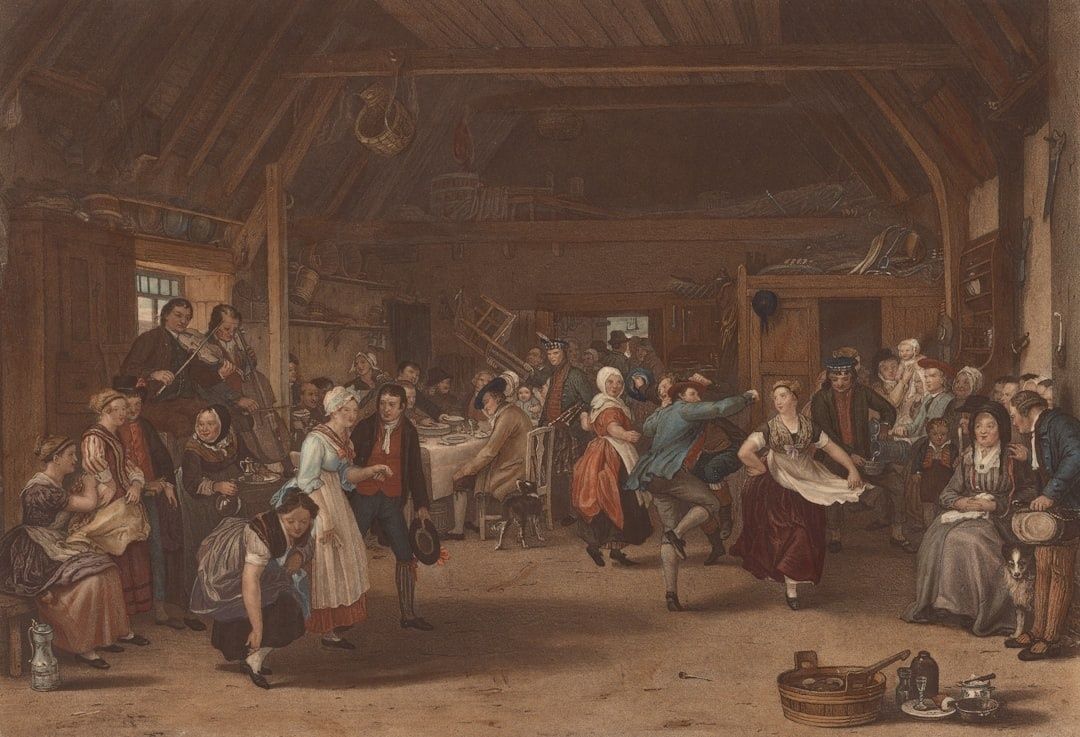
Historical painting of a lively barn dance with musicians and dancers
Oxford ceilidhs bring several strands of folk tradition into one shared social experience, where the music matters as much as the steps.
  • Scottish cèilidh often brings lively reels, jigs, and turning figures.
  • Irish céilí may use distinctive set dances, polkas, and group patterns.
  • English barn dance commonly draws on country dances with longways and square formations.
  • Contemporary Oxford nights frequently mix styles while keeping the dances accessible through a caller.

This blending should not be mistaken for a loss of tradition. Folk culture has always travelled, adapted, and absorbed local influence. Oxford’s university population, resident communities, visiting performers, and active folk clubs give the city a particularly varied dance life. One evening might include an established ceilidh band, a student-organised social, a workshop followed by a dance, or a festival event where traditional tunes meet a younger audience. The format changes, but the central invitation remains constant: listen to the music, learn enough to participate, and enjoy the company around you.

The Caller as Your Ultimate Safety Net on the Floor

The caller is the person who makes a ceilidh workable for beginners. Standing beside or in front of the band, the caller explains the dance, demonstrates its principal figures, and tells the room when to move. Before the music begins, they will usually walk everyone through the sequence slowly. This may involve practising a turn, showing how a line progresses, or asking dancers to rehearse the order of movements without music.

There is no expectation that anyone will arrive having memorised a routine. Indeed, memorising too much beforehand can sometimes make a first dance more stressful, because the live version may be adapted to the size and experience of the room. Callers know that some dancers will be completely new while others may have years of experience. They repeat key instructions, use memorable phrases, demonstrate with volunteers, and often keep speaking over the opening bars until the pattern becomes familiar.

During the dance, the caller remains an active guide rather than disappearing once the music starts. If the room is moving confidently, the explanation may become lighter and more rhythmic. If several sets lose their place, the caller can slow the progression, repeat a figure, or help dancers rejoin. A good caller also notices practical matters such as crowded corners, uneven experience, and dancers who may need a lower-impact alternative. When nerves rise, listening for the next spoken cue is more useful than trying to reconstruct every previous movement.

  1. Watch the walkthrough. Stand where the caller is visible and notice the direction of travel as well as the individual steps.
  2. Practise the main figure. Concentrate on one action at a time, such as joining hands, changing places, or turning a partner.
  3. Listen during the music. The caller’s voice will often supply the next instruction before the movement arrives.
  4. Rejoin without apology. If the sequence is lost, step back into the set at the next clear opportunity rather than stopping the whole line.

That structure is why ceilidhs are so different from stage dance classes. The aim is not to reproduce an impressive routine from memory. It is to help a room of people move together, even when the room contains different ages, abilities, heights, levels of confidence, and interpretations of the instructions. The caller’s presence turns uncertainty into part of the shared experience.

Essential Floor Etiquette for First-Time Dancers

Comfort begins before the first tune. Choose clothing that allows the shoulders, arms, and knees to move freely, particularly for dances involving handholds, turns, or repeated changes of direction. Layers are useful because a lively ceilidh can become warm quickly, while halls and historic college rooms may feel cool at the start. Footwear should be secure, comfortable, and suitable for a polished or uneven floor. Trainers can work well, provided they are clean and not so grippy that turning becomes difficult. Very high heels, loose sandals, and shoes that pinch are best left at home.

On the floor, follow the caller’s arrangement and join an open set rather than pushing into a crowded one. A partner is helpful but not essential. Many events encourage people to rotate partners, and it is perfectly acceptable to attend alone, ask someone politely, or join a group that is forming. If a partner prefers not to turn, lift, or move quickly, adjust the figure without pressure. Modern callers increasingly use gender-neutral role names or describe dancers by position, and the most important rule is simple: communicate clearly and respect consent.

  • Join at the end of a longways set or in an open place within a circle.
  • Keep moving in the direction of the set, leaving room for neighbouring dancers.
  • Hold hands lightly and avoid pulling, dragging, or forcing a turn.
  • Look ahead when travelling and take care around smaller dancers or anyone moving cautiously.
  • If a mistake happens, smile, recover, and allow the dance to continue.

Mistakes are not an interruption to the evening. They are part of its social language. Someone may miss a change of place, turn the wrong way, or arrive at the next figure a beat late. Usually, another dancer gives a friendly indication, the caller repeats the cue, and the set carries on. The laughter that follows is often generous rather than mocking. Folk dancing works because people accept that communal movement is untidy at the edges. A room that never makes a mistake is probably not inviting enough beginners.

A Beginner Cheat Sheet to Common Ceilidh Formations

Most ceilidh formations become easier once the shape of the group is understood. In a circle dance, everyone joins hands in a ring and follows instructions that may involve travelling left or right, moving towards the centre, or changing partners. A longways set places two lines opposite one another, with dancers progressing up or down the room as the dance develops. A square set usually consists of four couples arranged on the sides of a square. The caller will identify the formation before teaching the figures, so there is no need to decide where to stand without guidance.

Formation or action What to expect Helpful beginner focus
Circle dance The whole group moves as a ring, often changing direction or partners. Keep hands relaxed and watch the caller for direction.
Longways set Two lines face each other and progress through repeated figures. Notice who is beside you and travel with the line.
Square set Four couples form a square and interact with nearby sides. Keep the shape visible and respond to the spoken cues.
Swing Two dancers turn together, usually with joined hands or a comfortable ballroom-style hold. Agree on a gentle speed and keep your balance.
Dos-i-do Partners pass around one another and return to their original places without necessarily holding hands. Keep eyes up and follow the path around the other dancer.
Strip the willow A progressive figure in which a dancer turns successively with others along a line. Stay aware of the sequence and avoid rushing the turns.

These descriptions are only signposts, not examinations. A swing may be tiny and controlled rather than dramatic. A dos-i-do depends more on a clear pathway than on formal footwork. In stripping the willow, the rhythm of the progression matters more than making every turn look elegant. The caller may offer variations, and the same named figure can feel different according to the tune, the space, and the abilities in the room.

For a first ceilidh, prioritise physical rhythm and eye contact. Watch the person approaching, offer a hand when appropriate, and notice where the group is travelling. Small, steady steps are safer than large movements made in a panic. If the music accelerates, reduce the size of the step rather than trying to match it with frantic feet. The most polished-looking sets are not necessarily the most enjoyable. A relaxed room, in which dancers communicate and recover together, captures the heart of the tradition far better than a display of perfect technique.

Take the Floor and Find Your Rhythm Tonight

The best preparation for an Oxford ceilidh is curiosity rather than technical revision. Arrive in time to hear the caller’s introduction, wear shoes that can cope with an energetic floor, and let the first dance teach you how the evening works. If one formation feels confusing, the next may be much clearer. If a turn is uncomfortable, use a smaller movement or tell your partner. The event is designed to be learned in real time, with the music, instructions, and surrounding dancers helping you find the pattern.

Keep an eye on Oxford’s folk calendar for student band nights, community dances, workshops, pub sessions, and larger festival ceilidhs. Events connected with the Oxford Folk Festival offer especially good opportunities to listen, learn, and meet dancers from beyond the university. Go with a friend if that makes the first step easier, but do not wait for a perfectly prepared group. Step into an open set, introduce yourself, and let the caller do the teaching. Once the band launches into the tune, the room will carry much of the rest. Grab a partner, embrace the whirl, and allow the music to lead.